Why I started (and some of the frustrating experiences)
I didn't leave my job by choice. I got laid off as I've mentioned on my Substack.
But once it happened, I decided I wasn't going back to the market for a while, at least not in the next few months. I had some savings, and it felt like a good time to slow down and learn AI properly, with the whole day free for it instead of squeezing it around a job. I like building things and deciding how they should work, and I've wanted to spend more time learning.
I already knew how to build apps and had released a few. What I didn't have was a reliable way to get them in front of people. So next to code and making the apps better, video was one of the things I wanted to learn.
I kept seeing people grow through AI video. At a talk I went to, I met an influencer who had built a digital clone of himself, same face and same voice not 100% as I would like, but I've enjoyed the tool, sounded promising, and had it putting out videos on its own without him recording anything. Around the same time, other people online kept saying the same tool was the place to do that, to make a digital clone. He used HeyGen too, so that's where I started.
I paid $25 for the Creator a plan. Their promise was that a clip of 30 to 40 seconds would be enough to build a natural avatar of me. I recorded a few with a good camera, at plain home quality, and I even changed the setting to give it more to work with. It built the avatar, then I gave it a script to make the final videos, and both steps still felt robotic. I couldn't adjust them enough to get rid of that feeling. I made a handful, used less than half of what I'd paid for, then let the rest expire. HeyGen wasn't really the problem. I just couldn't pull the output toward my own taste, and I lost interest before I learned much.
Step one, the input: the clips I recorded to train it. Good camera, plain home quality, and I varied the setting on purpose.
Step two, the avatars it built from those clips, before any script. This was the part meant to look like me.
Step three, the final videos: the avatar given my script. These didn't convince me either.
I'd wanted to study AI video for a while before that, but the cost always stopped me. Learning it properly means getting a lot wrong, and every generation costs something. So in June, when Higgsfield ran a promotion for 1 month unlimited Seedance Fast generations, I subscribed. I was still paying for the subscription, but each generation no longer felt like another charge. When a bad take costs money, I get careful and try fewer things. With the per-generation cost gone, I could deliberately try ideas that might fail and see what happened. That's when I started figuring out how the tool actually behaved.
The same promotion threw in something else for one week: unlimited use of a few image models I hadn't touched before, like Nano Banana Pro. So I tried it. The images were nice and consistent, but I couldn't find much use for them. I already had a ChatGPT subscription that could generate images inside my plan, and through its CLI I could pull images straight into my own workflow and agent setup, while with Higgsfield I had to sit inside its own interface. The image side of the promo didn't add much for me.
I started with Higgsfield's templates because I knew nothing yet. The examples let me see the finished result and the way it had been made before I tried my own version. For the first few days, I mostly made variations. I took an example and its prompt, tried another angle, adjusted it, then rebuilt the idea inside my own workflow. That gave me somewhere to start without pretending I already knew what I was doing.
Across that whole month, Higgsfield was an almost daily presence. I had a one-month window on the unlimited plan and wanted to test as much as I could inside it, which made for a not-especially-healthy stretch. June 19 is when I created the account and when the promotion started, so these numbers cover just about the whole run.
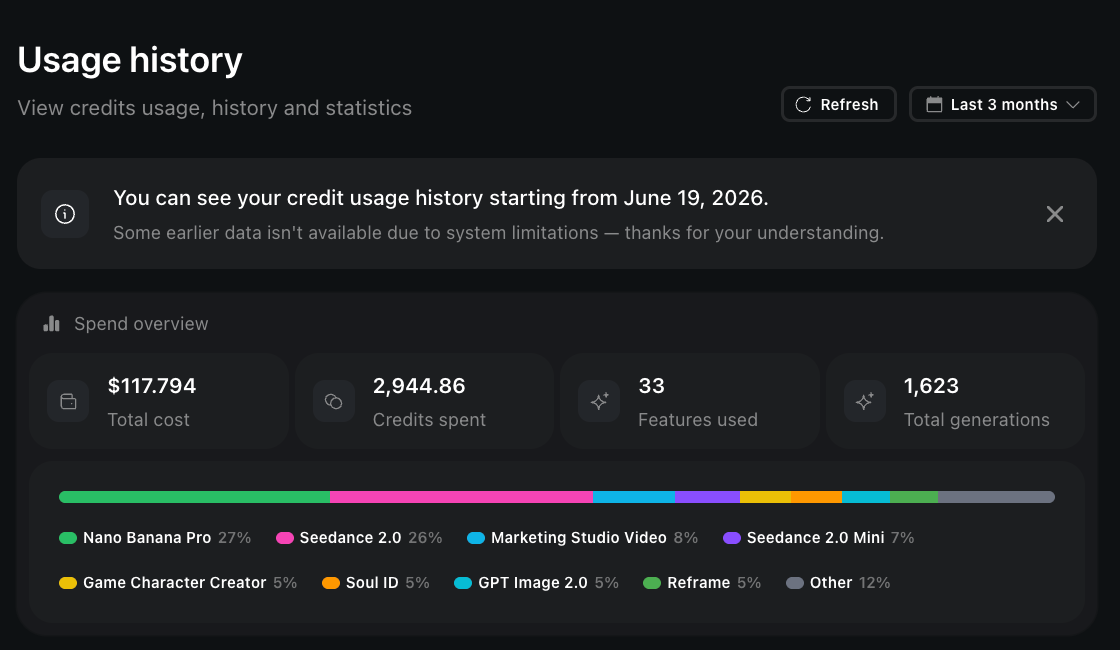
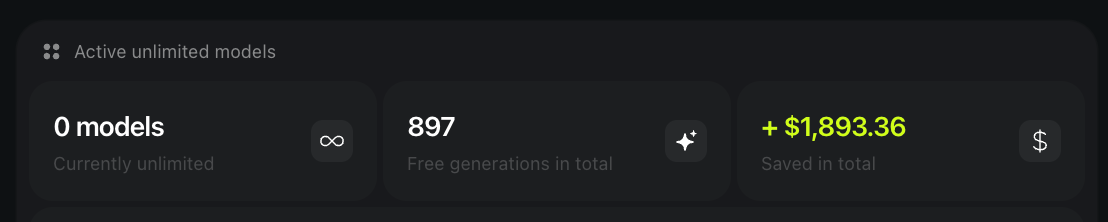
Straight from Higgsfield's usage screen. The free-generation count mixes images and video, and the roughly $1,900 it says I "saved" is an inflated what-I-would-have-paid estimate. Still, those were real generations, included in the plan.
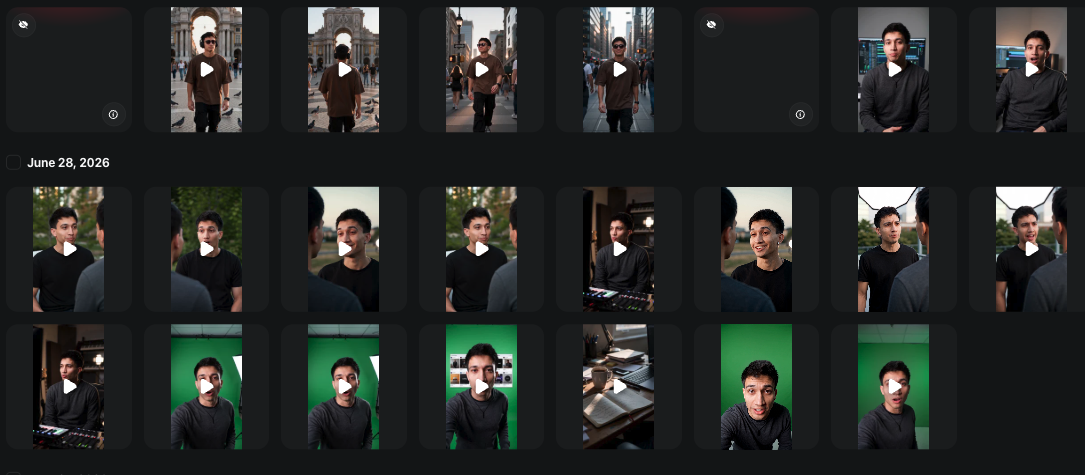
Two scrolls through the gallery. Most of it went nowhere, but that is what testing looked like.
Eventually I ran out of templates to copy. They had shown me what the tool could do, but I now had to decide what I actually wanted to make, and the answer was pretty obvious. I wanted the person in the video to look like me.
Higgsfield had its own version of the avatar idea, a feature called Soul. It builds a character of you the way HeyGen does, but it trains on a lot more images. It still didn't work for realistic, true-to-life results, and it didn't end up looking much like me. Part of that was on me: I didn't have many good photos, so I threw in as many as I could and hoped the volume would help. It came out better than HeyGen, probably because it worked from images instead of a short clip, but I still didn't like it. A few of the expressions were close to mine, and that was about it.
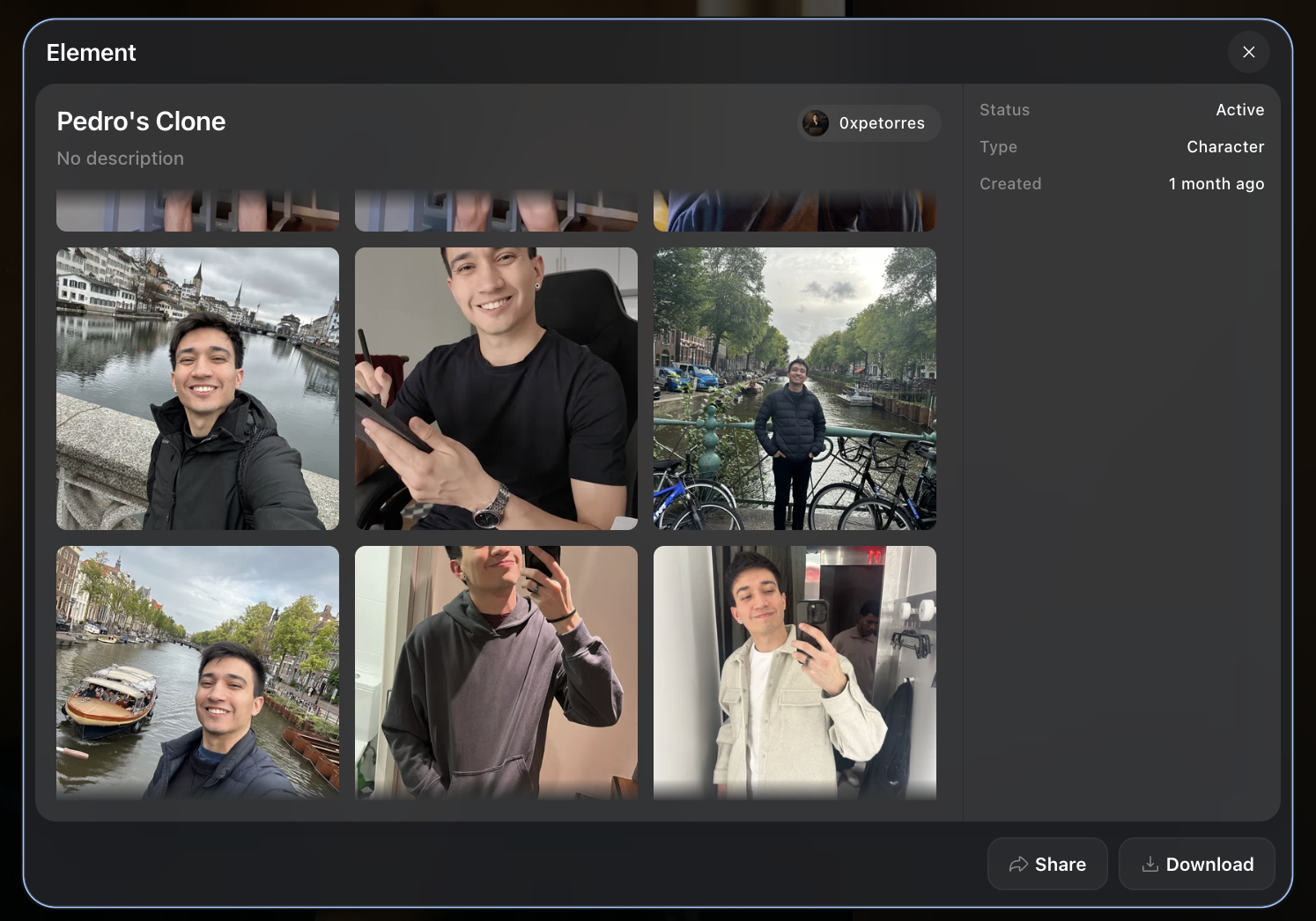
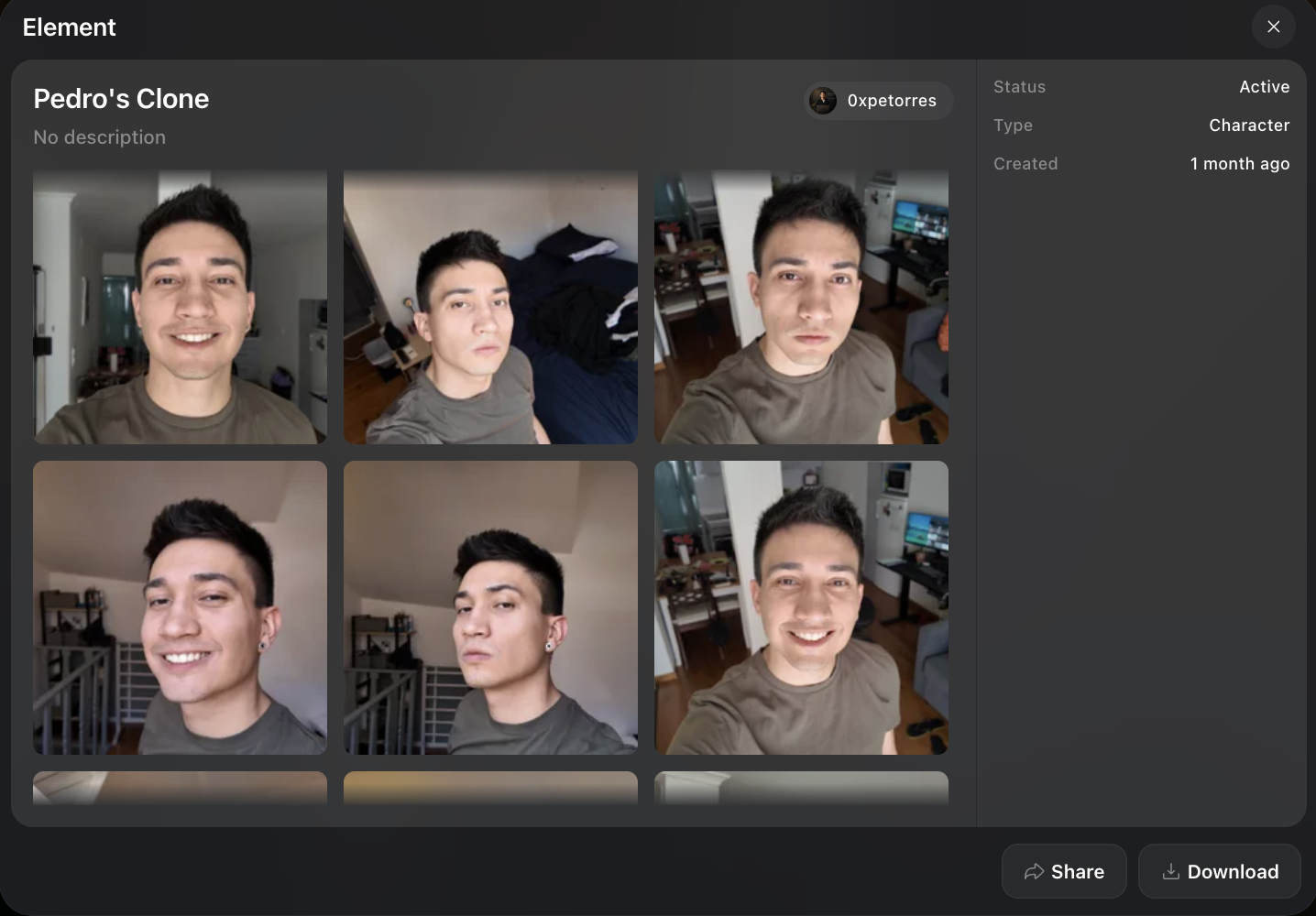
The real photos I fed it, in Higgsfield's character panel. Plain selfies, whatever I had.
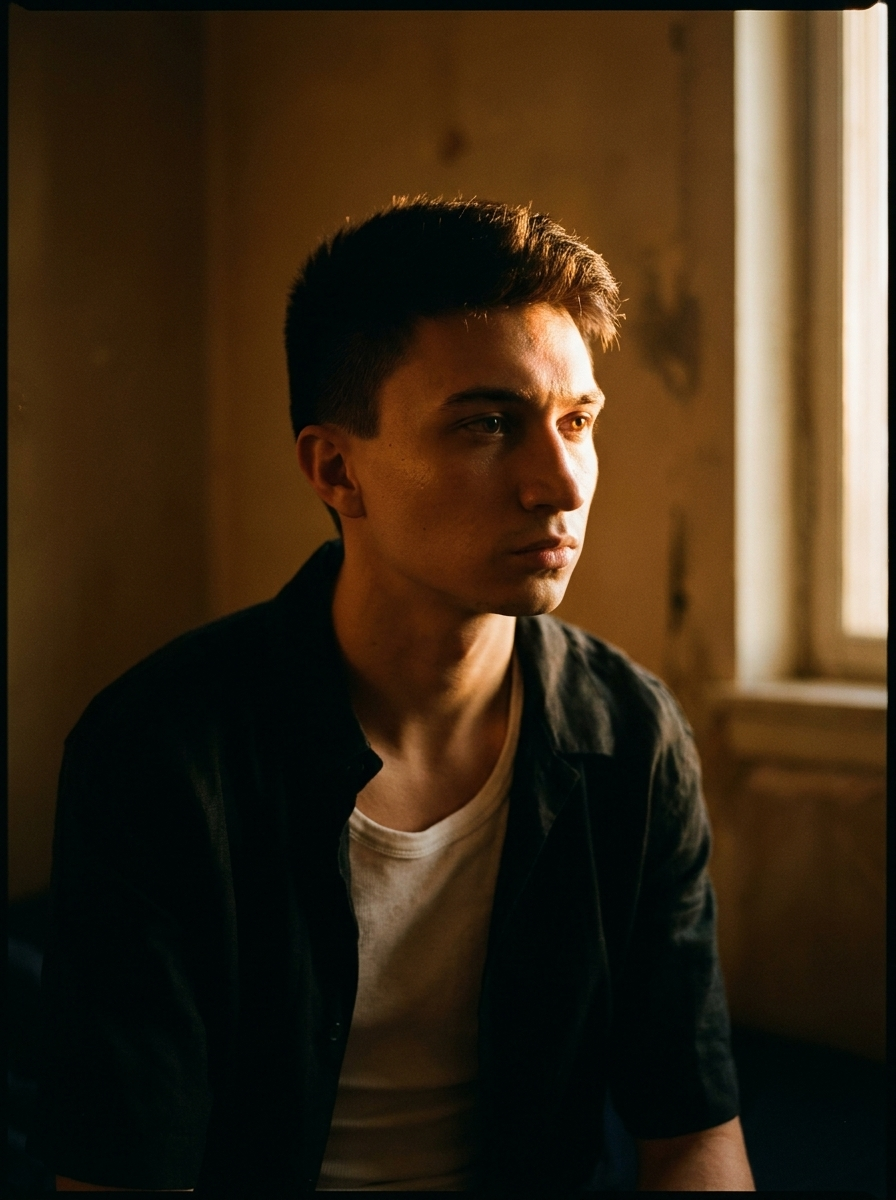
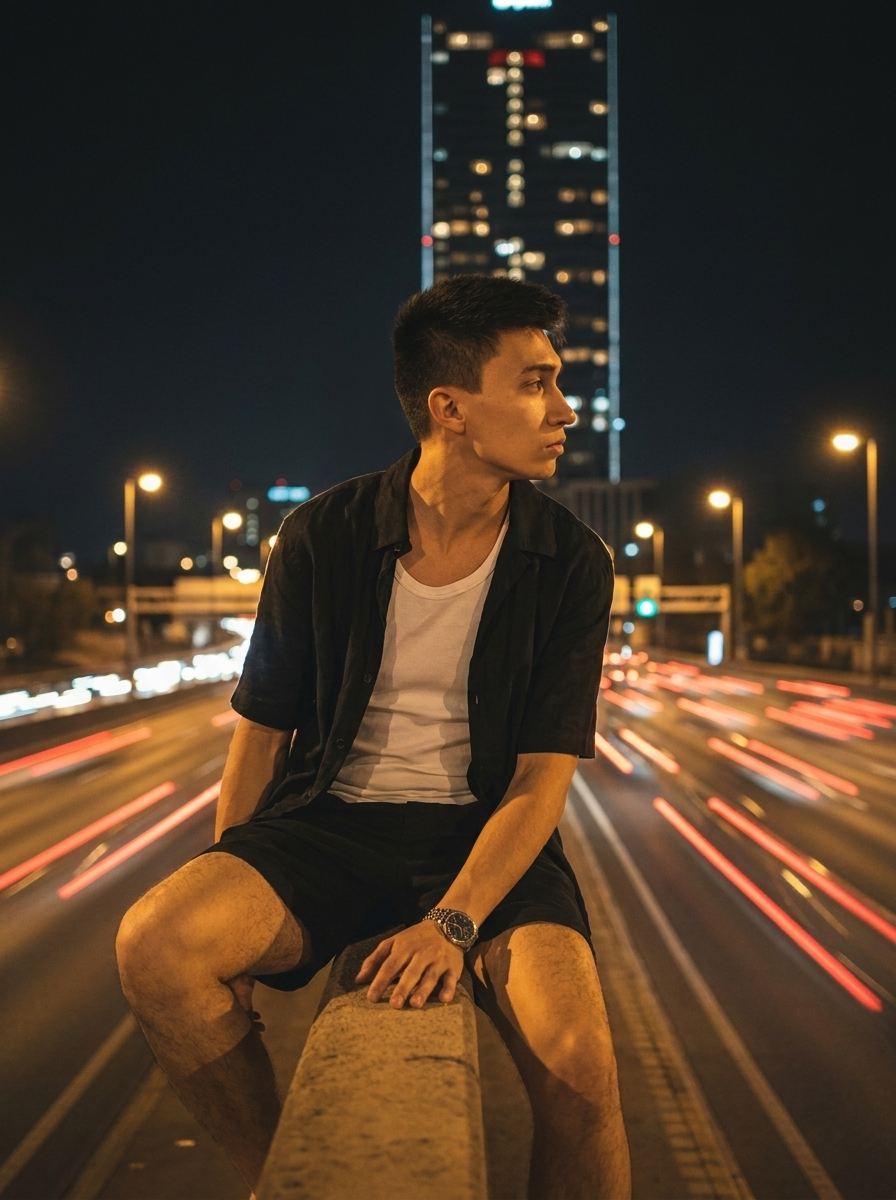
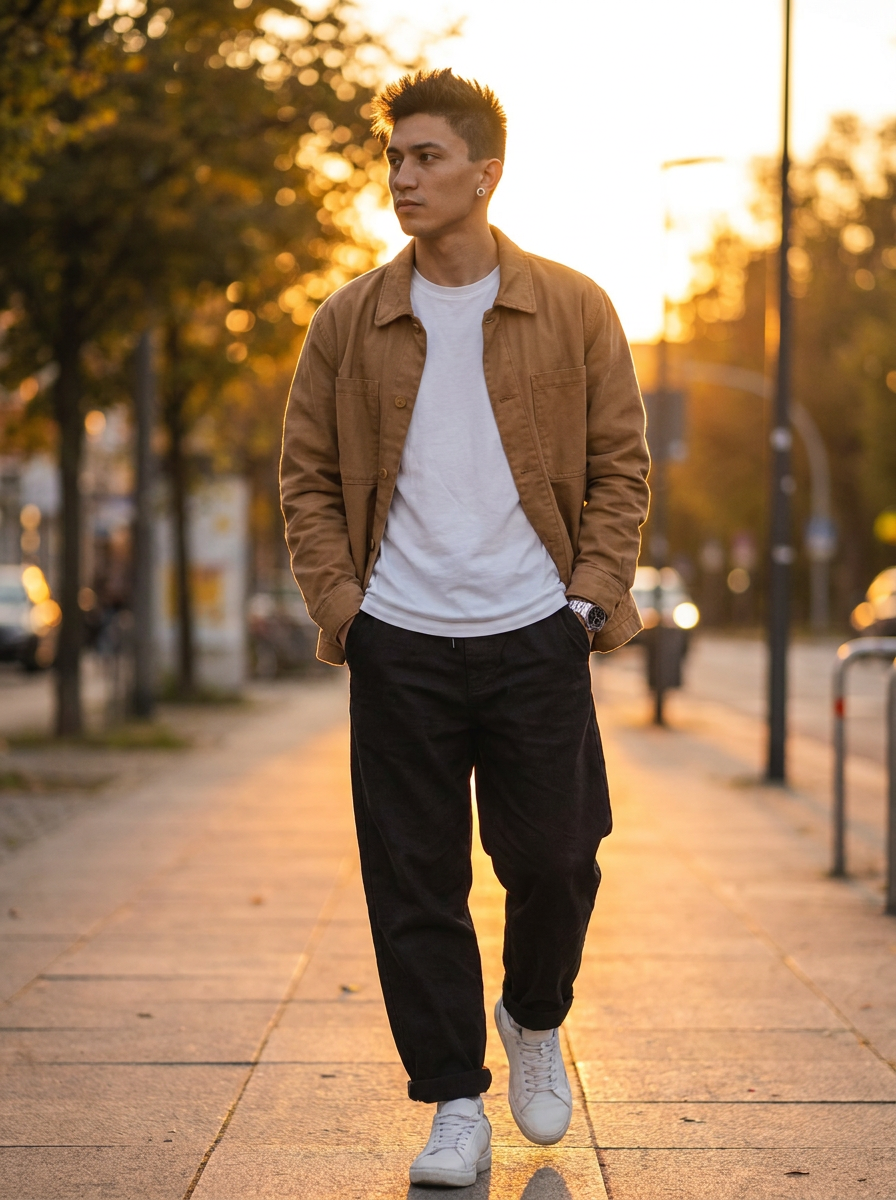
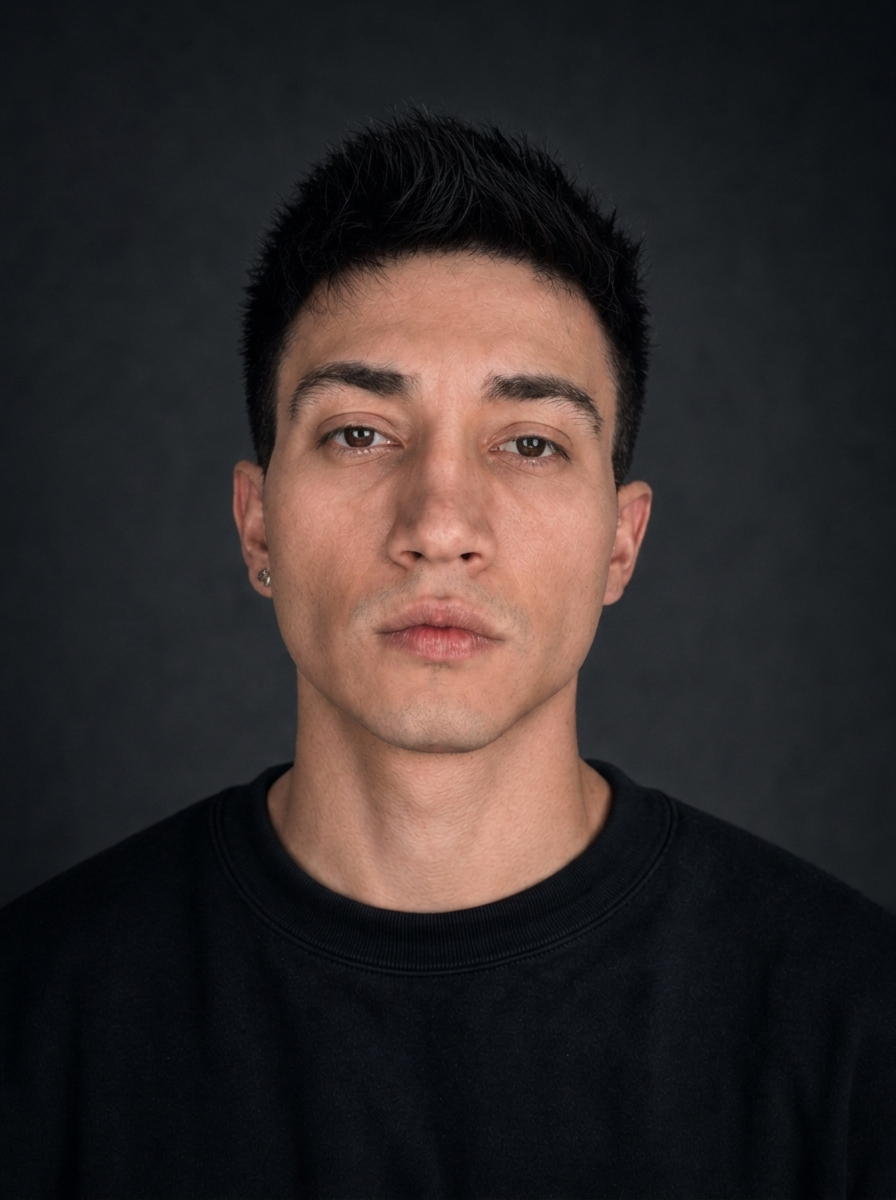
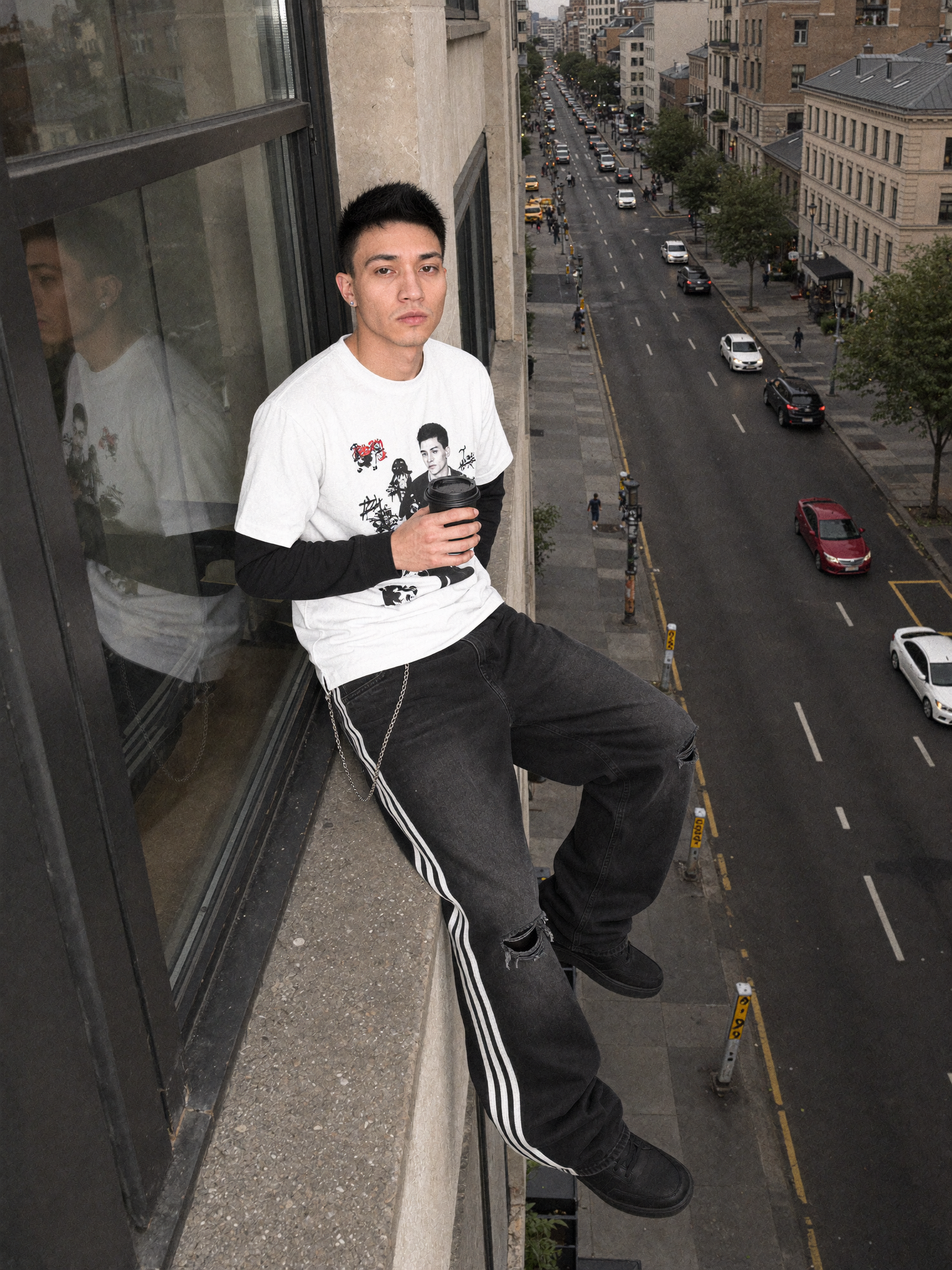
Higgsfield Soul, trained on my photos. They hold up as images, but they never quite read as me.
I kept trying to pin down what was off. I showed the results to friends to check whether it actually looked like me or whether I was just seeing myself in it. I took real photos of myself and had the AI compare them against what it had generated, so it could point out the differences and I could understand the gap, then push the next version closer to the real me. I also tried some of Higgsfield's templates to make multishots with my Soul, but I got tired of it fast. It wasn't really the use I should have been giving it. My guess is that Soul works better for a different kind of person, or a different kind of project, than the realistic version of myself I was after.
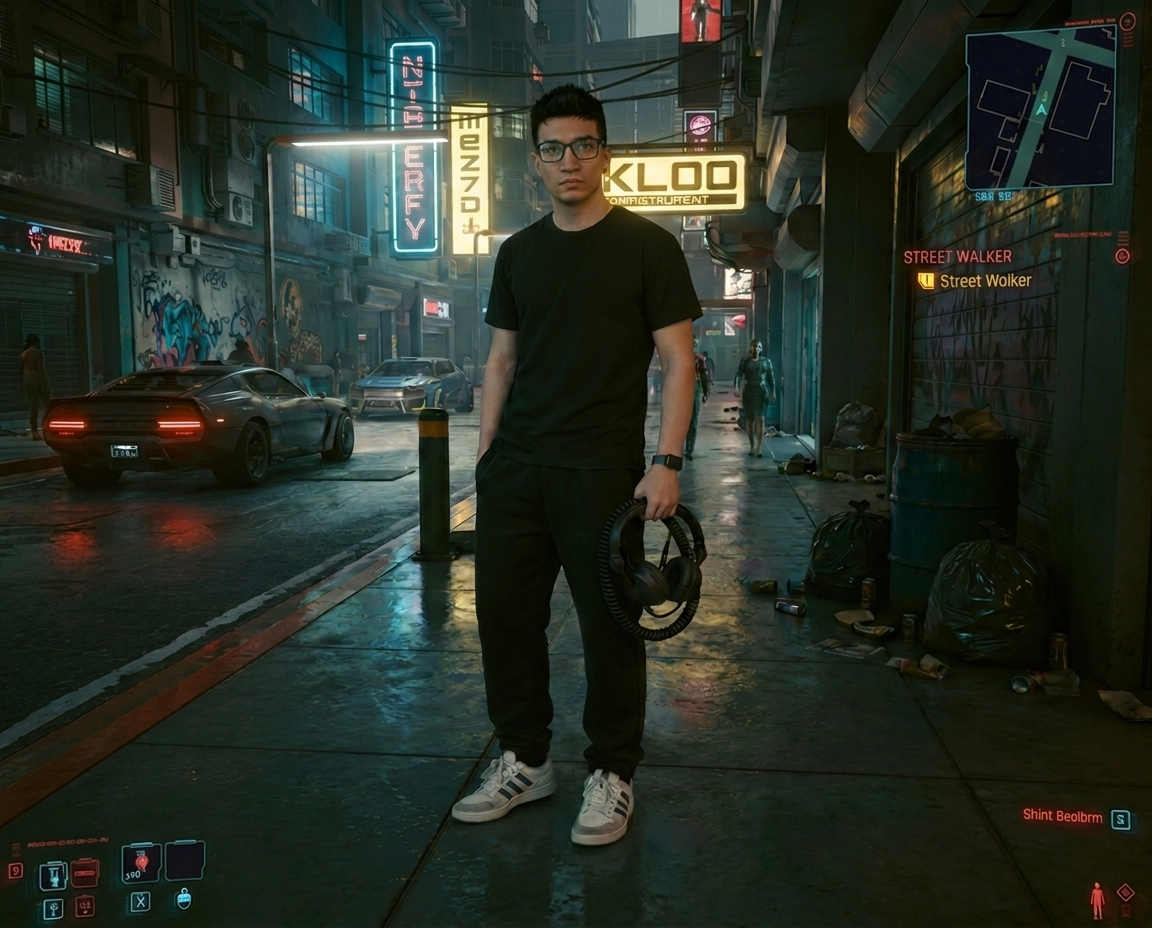
One thing did click along the way. When I uploaded a single photo of myself at generation time, instead of leaning on the Soul character, I got much less drift and the face held together better. Around then I landed on a look I liked, close to cyberpunk. One image came out close to a photo I had uploaded, and I liked the style enough to stop and pay attention.
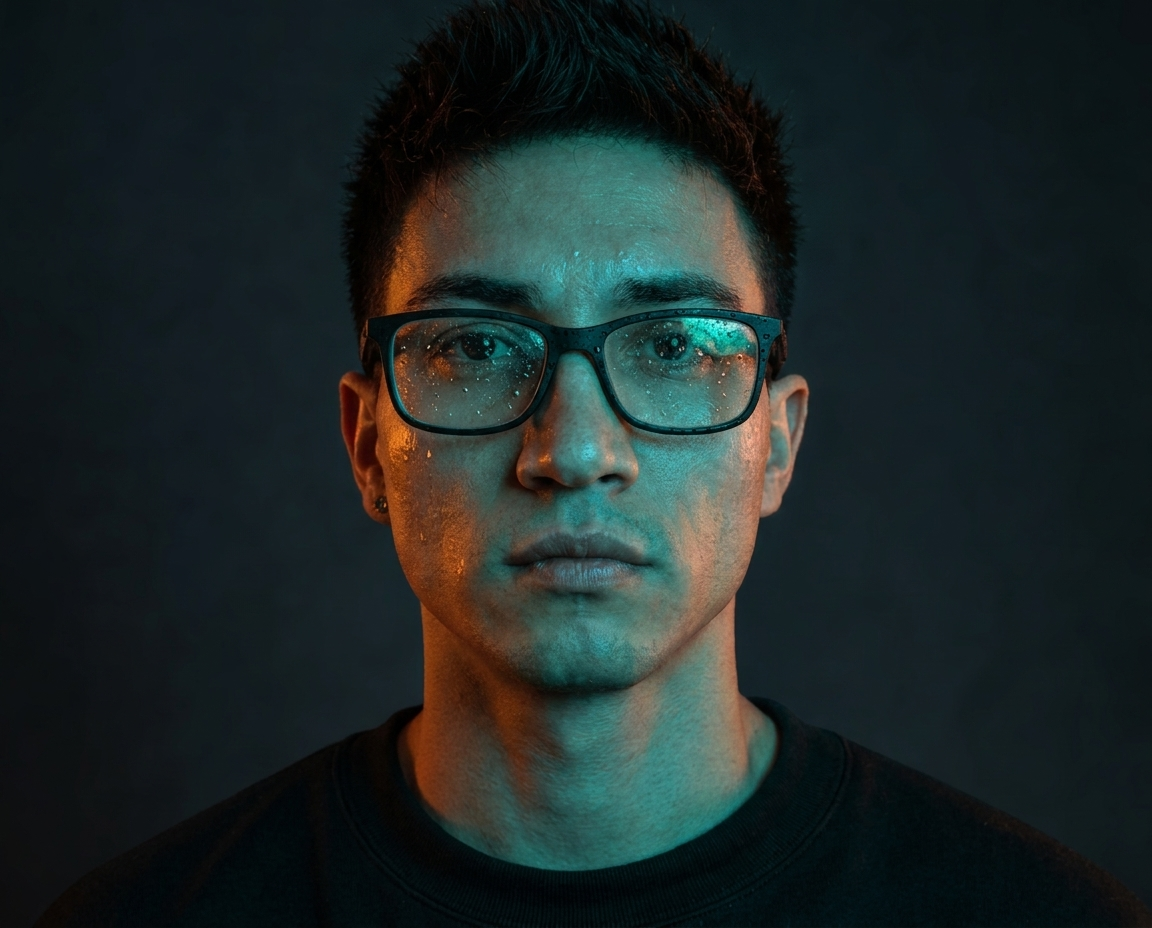
This one I liked. Not realistic, but the look landed, and it came out close to a photo I'd fed it.
It still wasn't me, not fully, and friends kept telling me the same. So instead of fighting something I didn't know how to fix, I went a different way. I took that image, the one whose look I liked and that was clearly not realistic anyway, dropped the realism on purpose, and moved to a drawn style I could build a story around and learn from.
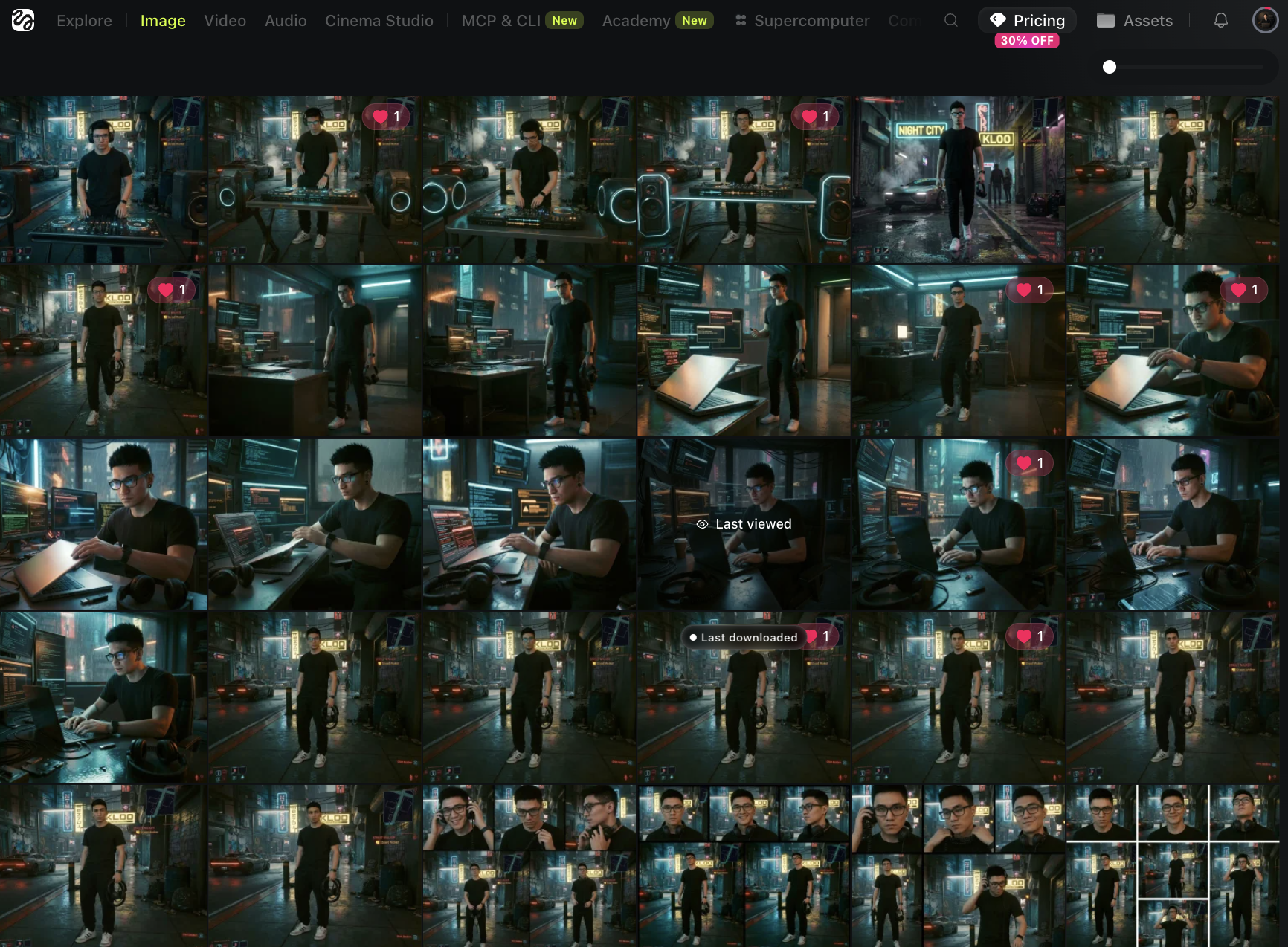
A slice of the character generations. I ran through a lot of these to land one I actually wanted to keep.
Where it landed: a character, not quite me, but something I could work with. This is the one I started building a story around.
To keep getting something out of it, I changed what I was using it for. Instead of generating clips to see what the tool could do, I wanted the videos to tell a story, so I'd get two things at once: something worth watching, and a real reason for the videos to exist. That meant learning the craft around the video too, direction most of all, not just turning a prompt into a finished clip. I didn't want to use the tool for its output alone. I wanted to understand it well enough to build an idea with it.
That character is where Part 2 starts. It's also where the videos stop being tests of whether the tool could copy my face and start being something closer to a film, not considering realism, but going to the other parts.